





















Modernize Critical Business Systems Without Losing What Works

Assess, upgrade and transition legacy ERP, CRM and custom applications while preserving essential processes, data, integrations and operational continuity. 

MODERNIZATION PRESSURES

Business-Critical Systems Can Become Operational Constraints

Legacy applications often continue supporting important processes long after their technology, integrations and
customizations become difficult to maintain. 

Unsupported Versions Increase Risk 

Older ERP and CRM versions may no longer receive mainstream product updates, security improvements or compatibility support. 

Customizations Accumulate Over Time 

Years of extensions, reports and workarounds can make upgrades more complex and obscure which functionality is still genuinely required. 

Integrations Become Fragile 

Point-to-point interfaces and undocumented data exchanges may fail when applications, authentication methods or data structures change. 

Reporting Depends on Legacy Structures 

Operational and financial reports may rely on outdated databases, custom queries or manually maintained extracts. 

Security Models No Longer Match Current Roles 

Legacy access structures may not reflect current responsibilities, approval authority or segregation-of-duties requirements. 

Security Models No Longer Match Current Roles 

Duplicated, incomplete or inconsistent records can become more difficult to resolve when they are migrated without proper assessment. 

User Experience Limits Adoption 

Older interfaces and manual workflows may prevent employees from using mobile, self-service and automation capabilities.

Direct Upgrade May Not Be the Best Option 

Where environments are heavily customized or poorly adopted, a reimplementation may provide a cleaner and more sustainable path. 

1. Assess

Establish the current functional, technical and operational baseline. 

Key Activities

  • Application inventory 

  • Process review  
  • Code and customization assessment  
  • Integration discovery  
  • Data profiling  
  • Infrastructure review  
  • Risk identification

2. Rationalize

Decide what should be retained, redesigned, replaced or retired. 

Key Activities

  • Customization classification  
  • Report rationalization  
  • Process simplification  
  • Interface consolidation  
  • Data-retention decisions  
  • Standard-capability comparison

3. Design

Define the target environment and migration approach. 

Key Activities

  • Target architecture  
  • Future-state process design  
  • Security model  
  • Data strategy  
  • Integration architecture  
  • Reporting strategy  
  • Cutover approach 

4. Remediate

Resolve issues that would otherwise move into the new environment. 

Key Activities

  • Data cleansing  
  • Code remediation  
  • Configuration cleanup  
  • Security redesign  
  • Process correction  
  • Infrastructure preparation  

5. Migrate 

Move approved data, configurations and required functionality. 

Key Activities

  • Migration templates  
  • Transformation logic  
  • Trial migrations  
  • Historical-data strategy  
  • Reconciliation  
  • Final migration planning  

6. Integrate 

Rebuild or modernize connections with business and operational systems. 

Key Activities

  • API development  

  • Middleware configuration  
  • Authentication modernization  
  • Error handling  
  • Logging and monitoring  
  • End-to-end data validation 

7. Validate 

Confirm that the modernized environment supports complete business operations. 

Key Activities

  • Functional testing  

  • Regression testing  
  • Integration testing  
  • Security testing  
  • User acceptance testing  
  • Performance validation  
  • Cutover rehearsal  

8. Cut Over 

Execute the production transition with clear ownership and fallback planning. 

Key Activities

  • Final data migration  

  • Transaction freeze coordination  
  • Environment activation  
  • User access  
  • Interface transition  
  • Go-live communication  
  • Rollback readiness  

9. Stabilize 

Resolve production issues and monitor business continuity. 

Key Activities

  • Hypercare  

  • Incident prioritization  
  • Performance monitoring  
  • Integration monitoring  
  • User assistance  
  • Reconciliation  

10. Optimize 

Address improvement opportunities after the environment becomes stable. 

Key Activities

  • Process optimization  
  • Workflow automation  
  • Reporting improvements  
  • Power Platform extensions  
  • User-experience enhancements  
  • Enhancement roadmap

KAISPE MODERNIZATION LIFECYCLE 

Move from Assessment to a Stable Modern Environment 

Turn assessment insights into a stable, modern environment built for long-term business needs.

MANUFACTURING PROCESS COVERAGE

Understand the Environment Before Selecting the Path 

The readiness assessment determines the technical, functional and operational effort required to modernize the current system. 

Application Assessment 

Review the current product and version, modules, legal entities, locations, and critical processes, along with environment topology, batch jobs, performance constraints, and support history.

Customization Assessment

Classify existing developments by business need, standard functionality, configuration, Power Platform suitability, extensions, usage, and technical risk.

Data Assessment

Connect buyers, suppliers and contractors across onboarding, RFQs, quotations, purchase orders, delivery documents and invoices.

Integration Assessment 

Document connected applications, data ownership, interface frequency, authentication, failure handling, monitoring, third-party dependencies, and unsupported integration components.

Reporting Assessment 

Review operational and financial reports, regulatory outputs, dashboards, custom queries, data-warehouse dependencies, and Power BI readiness.

Infrastructure and Cloud Readiness 

Evaluate hosting, infrastructure, access, environment strategy, disaster recovery, and cloud migration constraints.

PLATFORM MODERNIZATION 

Support Current and Legacy Business Technology Environments

KAISPE’s current solutions portfolio spans Microsoft Dynamics 365, Business Central, Customer Engagement, Power Platform, Azure and Oracle NetSuite, which supports a broader modernization approach than version upgrades alone.  

Dynamics 365 Business Central 
Support version upgrades, extension readiness, data transition, add-on compatibility and cloud adoption. 

Popular
Microsoft Dynamics Customer Engagement 
Modernize legacy CRM processes, workflows, customizations, integrations and reporting. 

New
Microsoft Power Platform 
Use Power Platform to replace suitable legacy workflows and experiences without recreating ERP customizations.

New
Microsoft Azure 
Microsoft Azure 
Support cloud architecture, identity, integration, data services, APIs, hosting and environment modernization. 

Popular
Microsoft Power BI 
Microsoft Power BI 
Modernize operational, management and financial reporting around governed data sources. 

New
Oracle NetSuite 
Oracle NetSuite 
Support integration, application enhancement and selected modernization requirements in NetSuite-based environments. 

New
Custom Business Applications 
Rebuild or extend business-critical applications through modern web, mobile, API and cloud technologies. 

New

PATH DECISION

Do Not Carry Technical Debt Forward Without Review

A direct upgrade is not automatically the safest or least expensive option. 

  • Standard functionality is widely used
  • Customizations are limited and documented
  • Data quality is acceptable
  • Existing processes remain relevant  
  • Integrations can be upgraded  
  • Users are satisfied with the operating model
  • Customizations dominate standard functionality
  • Processes no longer reflect the business  
  • Data quality is poor  
  • Security design is outdated  
  • Reporting depends on unsupported structures  
  • Multiple companies need consolidation  
  • Major business or regulatory changes have occurred  
  • The organization wants to simplify before moving forward
  • Core ERP processes can be migrated  
  • Selected functions should be redesigned  
  • Legacy systems must remain temporarily  
  • Modern applications can be introduced in phases  
  • Integration can reduce immediate replacement pressure  
  • Direct upgrade 
  • Reimplementation  
  • Phased modernization  
  • Selective application replacement  
  • Integration-led transition  
  • Retirement or archive strategy  

SHARED MODERNIZATION OWNERSHIP 

Business Input Drives What Moves Forward

KAISPE leads implementation planning and delivery, while customer participation remains essential for business decisions, data quality and user adoption. 

1
Leadership & Decisions
Executive sponsorship, process-owner access, timely scope/design approvals, and business-continuity decisions.
2
Data & Technical Readiness
Technical documentation, customization review, data ownership and cleansing, plus integration-owner participation.
3
Testing & Adoption
UAT, cutover coordination, training participation, and confirmation of valuable processes and data.
Done!

MODERNIZATION CONTROL 

Protect Operations While the Technology Changes

Maintain business continuity, manage change, and minimize operational disruption throughout the technology transition.

Upgrade Governance 
Ensure executive sponsorship, process and technical ownership, clear governance, scope control, dependency management, risk tracking, and cutover approval.
Security Modernization 
Define user roles, approval authority, segregation of duties, identity, service accounts, integration credentials, audit requirements, and environment access.
Business Continuity 
Plan for blackout periods, transaction freezes, open orders, financial cutoffs, interface transitions, data reconciliation, rollback criteria, and emergency support.
Change and Adoption 
Prepare users through role-impact analysis, communication, process walkthroughs, updated training, super-user readiness, UAT participation, and post-go-live support.

DELIVERY PRINCIPLES 

Preserve Business Value Without Recreating Every Legacy Constraint 

KAISPE supports retailers at different stages of their technology journey—from new business-platform implementations to Dynamics AX modernization, commerce integration and focused application development. 

Assess & Rationalize First

Review the application, data, integrations, and customizations, removing obsolete components before migration.

Validate End-to-End Processes

Test complete business scenarios across finance, operations, integrations, and reporting.

Protect Business Continuity

Plan for cutover, rollback, reconciliation, and controlled risk throughout the transition.

Prioritize Standard & Modern Capabilities

Use current platform functionality and modernize integrations with secure, scalable architecture.

Modernize in Practical Phases

Use staged delivery, stabilize the environment, then introduce further enhancements.

CUSTOMER SUCCESS

Proven Across Global Industries

Upgrade

INTECH modernized from AX 2012 to Dynamics 365 Finance & Supply Chain across 14 regional companies, with multi-currency, project accounting, and payroll for 600+ employees.


INTECH
Industrial Automation
Upgrade

KAISPE helped Khaadi optimize its Dynamics 365 environment through retail and supply-chain enhancements, gap resolution, and user support.

Khaadi
Fashion & Lifestyle Retailer
Upgrade

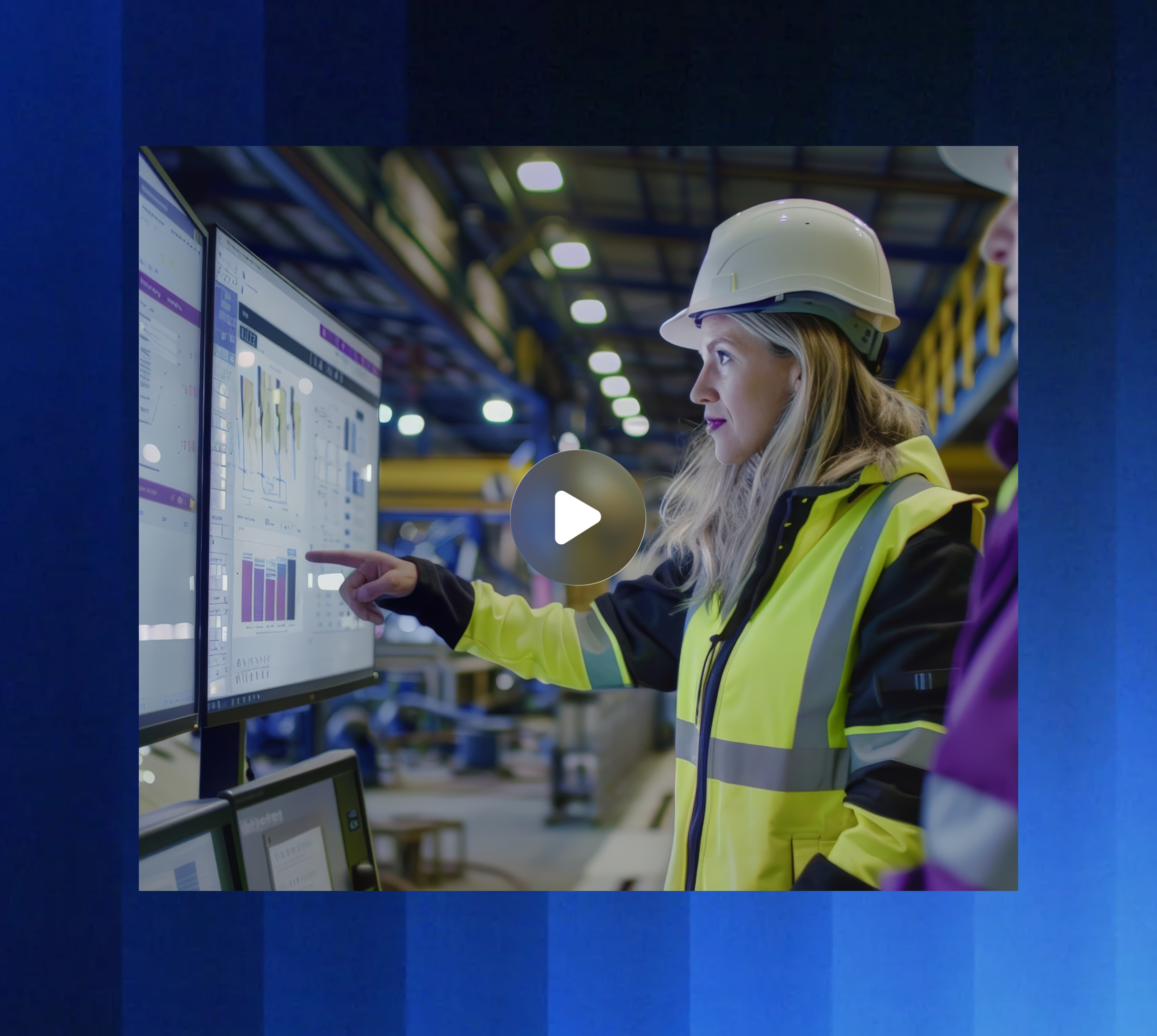
Stevin Rock integrated its legacy ERP with specialist asset-maintenance software, improving operational and financial data exchange.
Stevin Rock
Largest Crushed Rock Producers

STRATEGY & DELIVERY FOR BUSINESS GROWTH

Modernize Critical Business Systems with Confidence

Whether the requirement involves Dynamics AX migration, a Business Central upgrade, CRM modernization, cloud transition, integration remediation or a complete reimplementation, KAISPE can help determine and deliver the most practical path.